CRM for a pet shop
A customer runs out of pet food sooner than they remember it, and your shelf suddenly shows zero. ModalCRM keeps stock in pieces, kilograms and liters with a minimum level, gathers Telegram, Viber and Instagram messages into one feed and lets you pick customers who haven't bought for a while. It is stock and customer accounting, not a cash-register program — see the limits in the questions below.
A catalog in pieces, kilograms and liters
In Warehouse, the Products tab is a table with SKU, category, unit, purchase and selling price, stock and minimum. Units: piece, kilogram, liter, meter, box, set, so food, litter and accessories live in one catalog. Above the table: search, a category filter, Excel and a price import.
Set a minimum level on the product card: every morning the system checks which items have available stock below the minimum and sends a digest to the bell and by e-mail. The same items appear in the Low stock block on the Overview tab.

Stock by warehouse and stock-taking
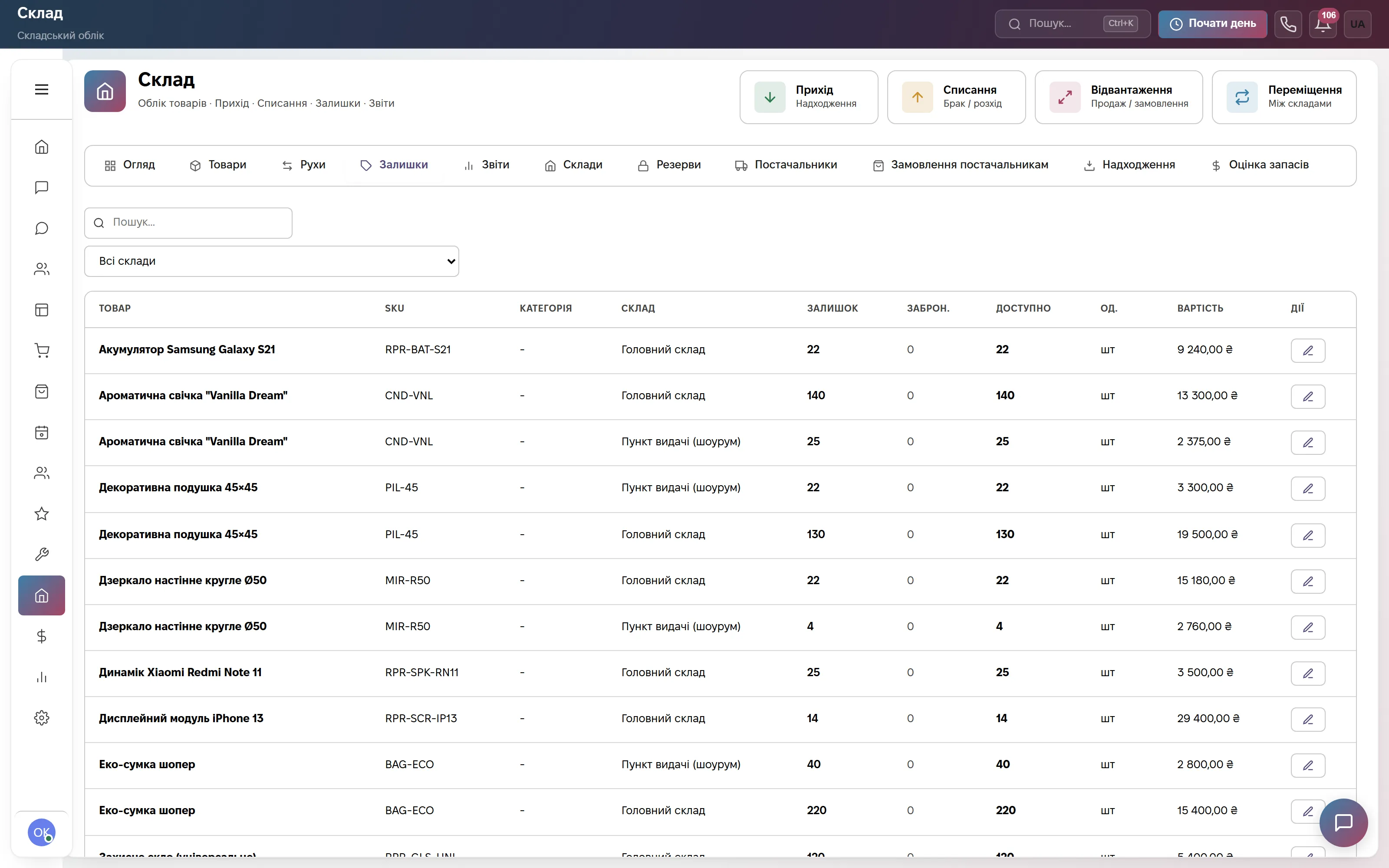
The Stock tab is a product-by-warehouse slice: physical stock, reserved, available and value. The screen shows two warehouses, the main one and a pickup point, so the back room and the shop floor are counted separately. A new order reserves the goods, so available stock stays honest.
Counted the bags on the shelf? Click the pencil in the row and enter the actual quantity: the system posts an Inventory: surplus or Inventory: shortage document itself, and the difference stays in the movement log. A supplier receipt updates stock and the purchase price.
Shop and online sales in one list
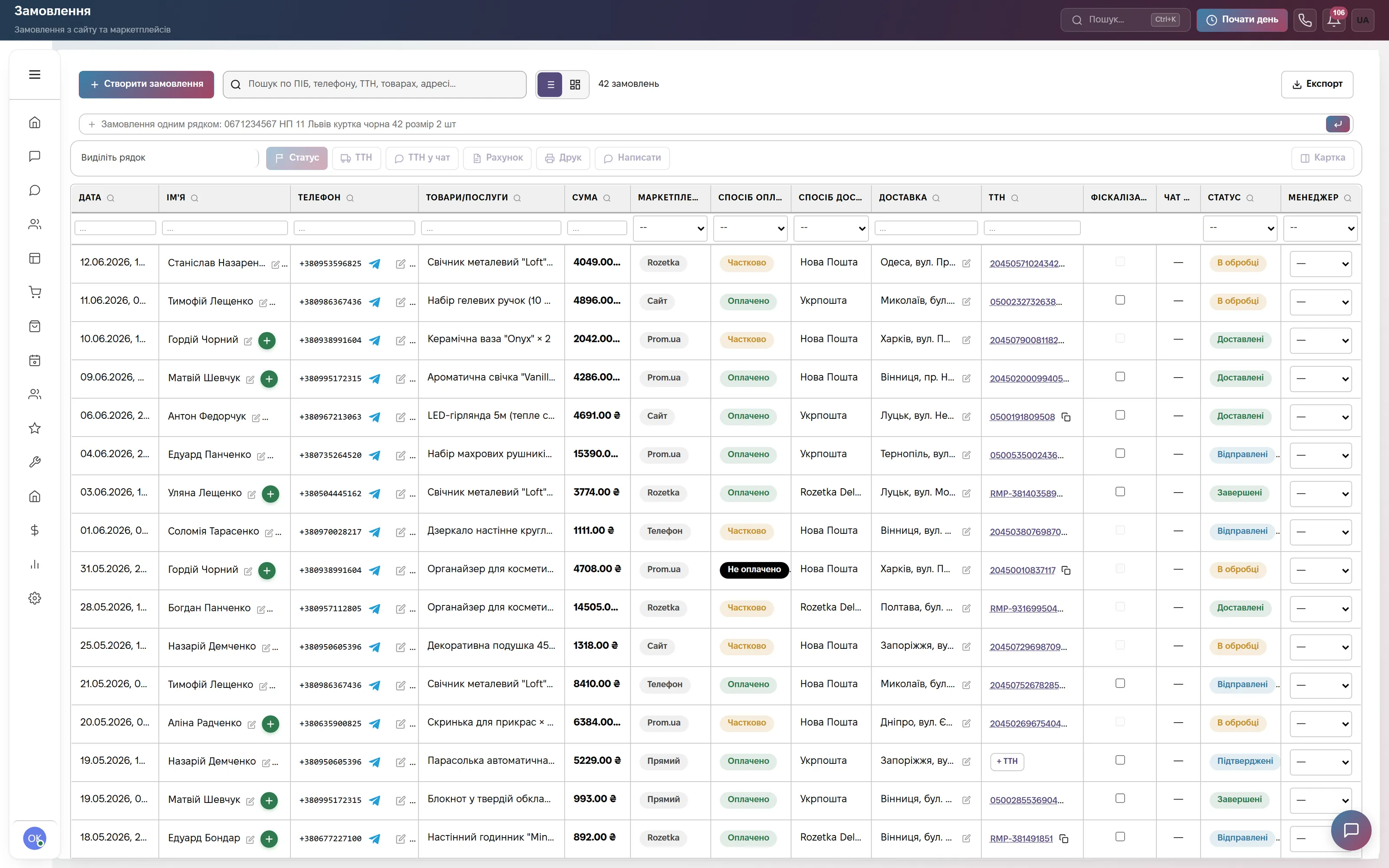
The Orders tab is a table: date, client, phone, items, total, payment method, delivery, waybill, a Fiscalization column, status and manager. Over-the-counter sales, website orders and marketplace orders sit together, each with its payment state: paid, partial or not.
Pickup and direct sale are entered the same way as a Nova Poshta shipment with a waybill. If Checkbox is connected, a fiscal receipt is issued when the order becomes paid. The quantity in an order can be fractional, for example 2.5 kg.
Repeat buyers in chats
Telegram, Viber, Instagram and site chats share one feed; the demo shows Instagram comments and a Telegram dialog about product availability. On the right is the client card: channel, first contact, the Order, Appointment and Ticket buttons and a One-line order field with the phone taken from the chat.
Keep a pet's name, species and breed in the client card's custom fields, and tag the client cat or dog: tags and the time since the last order then work as a filter for mailings. When closing a dialog, the manager picks a Reason for contact.

Remind those who haven't bought lately
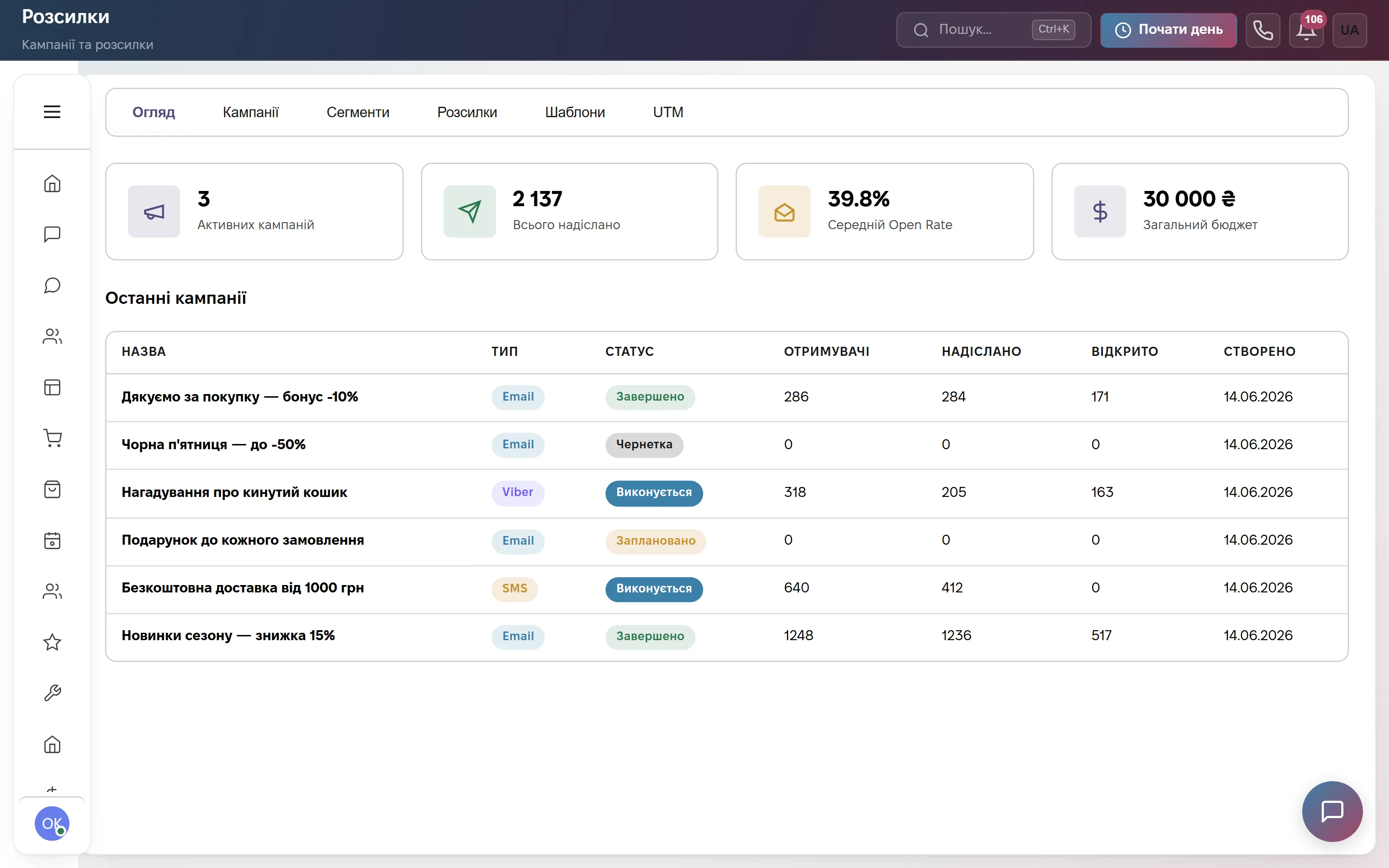
Mailings: e-mail, SMS and Viber campaigns, segments and templates; the screen shows opens, sent and recipients per campaign. A segment can combine city, tags, total spent, birthday month and the number of days since the last order.
On the «Everything included» plan the same condition can be handed to the Returning client automation: by default it messages clients whose last order is older than 90 days, and you set the number of days and a repeat interval yourself.
Which modules to turn on
What it costs
Site chat, messengers and a three-step bot. One user, 600 replies a month. Forever, no card.
Orders, warehouse and finance plus chats, calls, mailings and a pipeline. Team of up to 3, then +200 ₴ per user.
Every module: adds automations, appointments, HR and a client portal for tickets. Team of up to 10, then +200 ₴ per user.
Quarterly billing is 8% off, yearly 17% off. Rozetka, Prom and Nova Poshta integrations are not charged separately.
Frequently asked questions
Can I sell pet food by weight?
Yes. A product gets a unit: piece, kilogram, liter, meter, box or set, and the quantity in an order can be fractional, for example 2.5 kg. Stock is counted in the same units. There is no automatic bag-to-kilograms conversion: if you repack a bag, keep the product in one unit or create separate items and post the write-off and receipt by hand.
Are there expiry dates and batches?
No. A product has no expiry date or batch field: stock is counted by product and warehouse. Foods and medicines with expiry dates have to be tracked separately, for example with a task and a reminder for the date.
Will it replace the till in the shop?
No. There is no till screen or scanner sales mode: a barcode (EAN or UPC) is stored on the product card and can be imported, and a sale is entered as an order with the direct-sale source or as pickup. The customer's phone is required in an order. A Checkbox fiscal receipt is issued when the order becomes paid, if Checkbox is connected.
Where do I keep pet names, breeds and species?
In custom fields on the client card: text, number, date, yes/no, a pick list. There is no separate pet entity, so every client has the same fields. Custom fields are not available in mailing segments; use tags such as cat or dog for filtering.
How much does a CRM for a pet shop cost?
The free plan is 0 ₴: chats and documents, 1 user, 600 outgoing replies a month. A shop usually needs Commerce at 900 ₴/mo: orders, warehouse and finance plus chats, calls, mailings and a pipeline; a team of up to 3, then +200 ₴ per user. «Everything included» is 2 200 ₴/mo, a team of up to 10, and adds automations, HR and appointments. 14 days of the full plan free, no card. Servers are in Europe (Hetzner), the supplier is sole proprietor Viktoriia Lazukina, Ukraine, and the terms are the public offer.
See it on live data
A demo account with products, warehouses, orders and chats — no signup (it is a general demo shop, not a pet shop). Or try the full plan free for 14 days, no card required.